
Fibre-Maxxing: The Gut Health Trend UK Experts Actually Back
Most social media health trends come and go quickly. Fibre-maxxing is different. Instead of cutting things out, it asks you to add more plants to your plate. Unusually, UK dietitians and nutrition scientists are firmly on board.
At the same time, a darker trend keeps growing. The UK medicines regulator is still seizing fake weight-loss jabs sold online. Together, these two stories send one clear message: real wellness is built slowly and safely.
In this guide, you will learn what fibre-maxxing is and why experts support it. Next, you will see how to build up your fibre without bloating. Finally, we show where natural botanical support from SOS Essentials fits into a balanced routine.
Quick answer: what is fibre-maxxing?
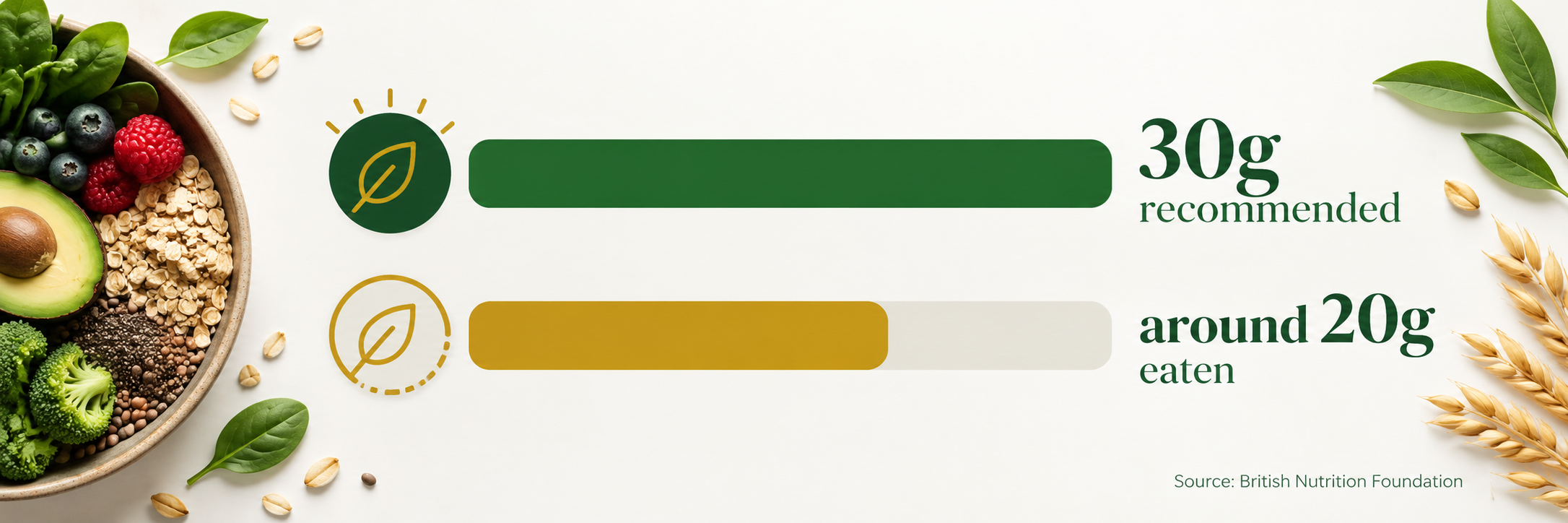
Fibre-maxxing means deliberately eating more fibre each day, mainly from whole grains, beans, lentils, fruit, vegetables, nuts and seeds. The NHS advises adults to aim for 30g a day. However, only around 4 in 100 UK adults reach that target. The safest approach is to build up gradually and drink plenty of fluids.
What is fibre-maxxing?
Fibre-maxxing is the habit of pushing your daily fibre intake up towards the recommended level. The name comes from TikTok, where people share high-fibre shopping baskets and meals. Yet the idea behind it is long-standing public health advice.
How much fibre do UK adults need?
The NHS says adults should aim for 30g of fibre a day as part of a healthy balanced diet. Children need less: about 15g for ages 2 to 5, and about 20g for ages 5 to 11.
In reality, most of us fall well short. According to the British Nutrition Foundation, most UK adults eat around 20g a day or less. As a result, the Foundation published a 2026 report on closing the UK fibre gap. So fibre-maxxing is really a fun name for catching up.
Why do experts support fibre-maxxing?
Fibre-maxxing earns expert approval for two reasons. First, the evidence behind fibre is strong. Second, it focuses on abundance rather than restriction.
Fibre and your digestion
The NHS explains that fibre helps digestion and helps prevent constipation. Similarly, the British Dietetic Association describes fibre as essential for your gut to work normally. Fibre also feeds the bacteria in your large bowel. That is exactly why your gut needs time to adjust when you eat more.
Fibre and long-term health
The British Nutrition Foundation links a high-fibre diet with a lower risk of heart disease, type 2 diabetes and bowel cancer. This conclusion comes from large population studies reviewed by the UK Scientific Advisory Committee on Nutrition.
Moreover, a major 2019 review in The Lancet pooled 185 prospective studies and 58 clinical trials. People eating the most fibre had a 15 to 30% lower risk of death from all causes and from heart disease, compared with those eating the least. In the clinical trials, higher fibre intakes were linked with lower body weight, blood pressure and cholesterol. The benefits were greatest at around 25g to 29g a day, as the University of Dundee summary explains.
In short, fibre-maxxing is a trend with genuine science behind it.
Why fake weight-loss jabs make safe habits matter more
While fibre-maxxing spreads, so do illegal weight-loss injections. On 14 October 2026, the MHRA and West Midlands Police seized over 12,000 fake pens from an industrial unit in Birmingham. The haul was worth around £2 million.
The regulator warned that these products had never been assessed for safety, quality or effectiveness. In other words, nobody can guarantee what is inside them. The MHRA also confirmed that retatrutide, one of the seized products, is not authorised for use in the UK.
This raid is not a one-off. Indeed, the MHRA has carried out a series of similar operations since October 2025.

How to stay safe
The MHRA's advice is clear. Anyone considering a GLP-1 weight-loss medicine should first speak to a healthcare professional. After that, they should only obtain it from a registered pharmacy with a valid prescription. To protect yourself:
Never buy prescription-only weight-loss medicines from social media, beauty salons or unregulated websites.
Check the MHRA #FakeMeds guidance before buying any medicine online.
Report any suspected side effect to your doctor or pharmacist, and through the MHRA Yellow Card scheme.
The real lesson: foundations beat shortcuts
The fake jab story and fibre-maxxing point the same way. Lasting wellbeing rarely comes from a quick fix bought from a stranger. Instead, it comes from everyday foundations: fibre, fluids, movement, sleep, and products from makers you can check.
To be clear, food supplements are not a replacement for medicines a doctor prescribes. Rather, they are one small part of a healthy lifestyle you build yourself.
How to start fibre-maxxing without bloating
Experts agree on one golden rule: go slowly. The British Nutrition Foundation warns that a sudden jump in fibre can cause bloating. Therefore, add fibre gradually so the bacteria in your gut can adjust.
Fluids matter just as much. The NHS suggests six to eight glasses of fluid a day for most people. As your fibre rises, keep a water bottle close by.
A simple four-week fibre-maxxing plan
Week | One change to make | Easy example |
|---|---|---|
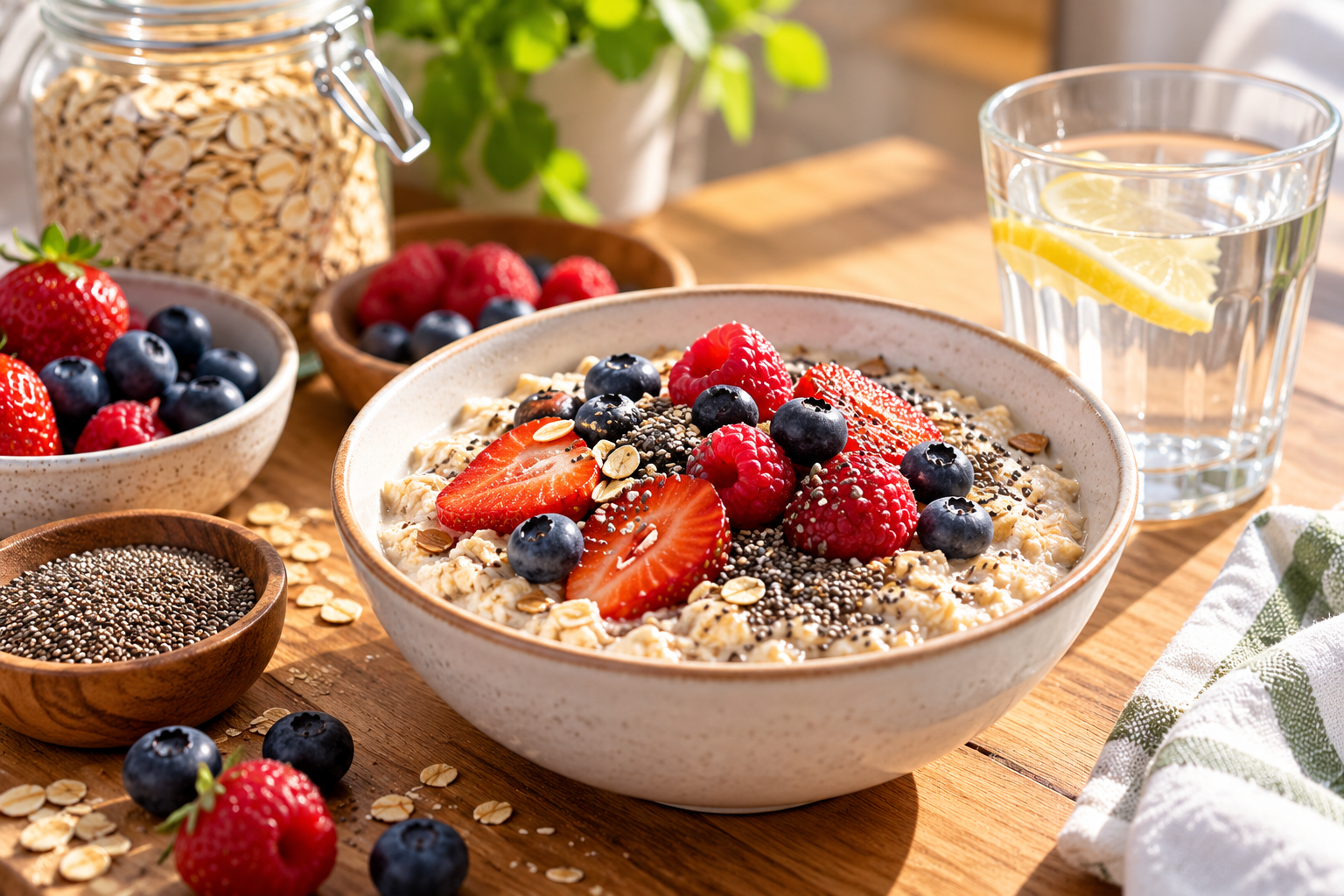
1 | Switch to wholegrain at breakfast | Porridge, or plain wholewheat biscuits with fruit |
2 | Add pulses to one meal a day | Lentils in a curry, or chickpeas in a salad |
3 | Keep the skins on and add a vegetable | Jacket potato with beans, plus an extra side of greens |
4 | Upgrade your snacks | A handful of almonds, fresh fruit, or hummus with oatcakes |
Every week | Drink steadily through the day | Six to eight glasses of fluid |
For example, the NHS notes that wholemeal spaghetti with a lentil and tomato sauce gives you around 11g of fibre. That single lunch covers more than a third of your daily target.
Read the label
Food labels make fibre-maxxing much easier. According to the BDA, a food counts as "high fibre" with at least 6g per 100g. Likewise, it counts as a "source of fibre" with at least 3g per 100g.
When to speak to a professional
Fibre-maxxing suits most adults, but not everyone. For instance, the BDA notes that people with IBS may find some fibres cause bloating, gas or diarrhoea. If you have a digestive condition, speak to your GP or a dietitian first. Likewise, see your GP about any lasting change in bowel habits.
Where SOS Essentials fits into a fibre-maxxing routine
Fibre itself has to come from food, and no supplement can replace your plate. Even so, many people pair whole-food habits with a botanical supplement as part of their daily wellness routine. That is where SOS Essentials comes in.
Who are SOS Essentials?
SOS Essentials is the trading name of Smart Organic Solutions Ltd, a botanical supplement and cosmetic brand based in Bradford, West Yorkshire. Founded in 2010, the company makes every product in the UK. All products are vegan, and the company is GMP certified and ISO 9001 accredited. It supplies customers directly and through a network of health practitioners and distributors. You can read the full story on our About Us page.
SOS Advance: eleven botanical oils in one daily formula
SOS Advance is our flagship botanical food supplement. It is designed to support the body's natural cleansing processes as part of a balanced lifestyle. The formula combines eleven oils:
Black seed, oregano, clove and cinnamon
Peppermint and spearmint
Frankincense, geranium and neem
Sweet orange and coconut
Oils and water do not normally mix. So SOS Advance uses nano-emulsification, which disperses the oils as tiny droplets in an alkaline water base. You can explore every plant in our ingredient guide. For the research on black seed, cinnamon and peppermint, see our natural blood detox guide.
SOS Advance comes in two formats:
SOS Advance Beverage, 250ml: take 10ml two to three times a day, directly or mixed with water or juice.
SOS Advance Capsules, 60: take 2 capsules two to three times a day. The capsules also contain food-grade diatomaceous earth.

SOS Advance: eleven botanical oils in one daily formula, made in the UK and GMP certified.
SOS Maintain: keep your routine going
Many customers follow a course of SOS Advance with SOS Maintain. It is a gentle daily botanical tonic, designed for longer-term use alongside a balanced diet.
Topical comfort for more active days
Fibre-maxxing often goes hand in hand with more walking and exercise. So our topical range helps you wind down afterwards:
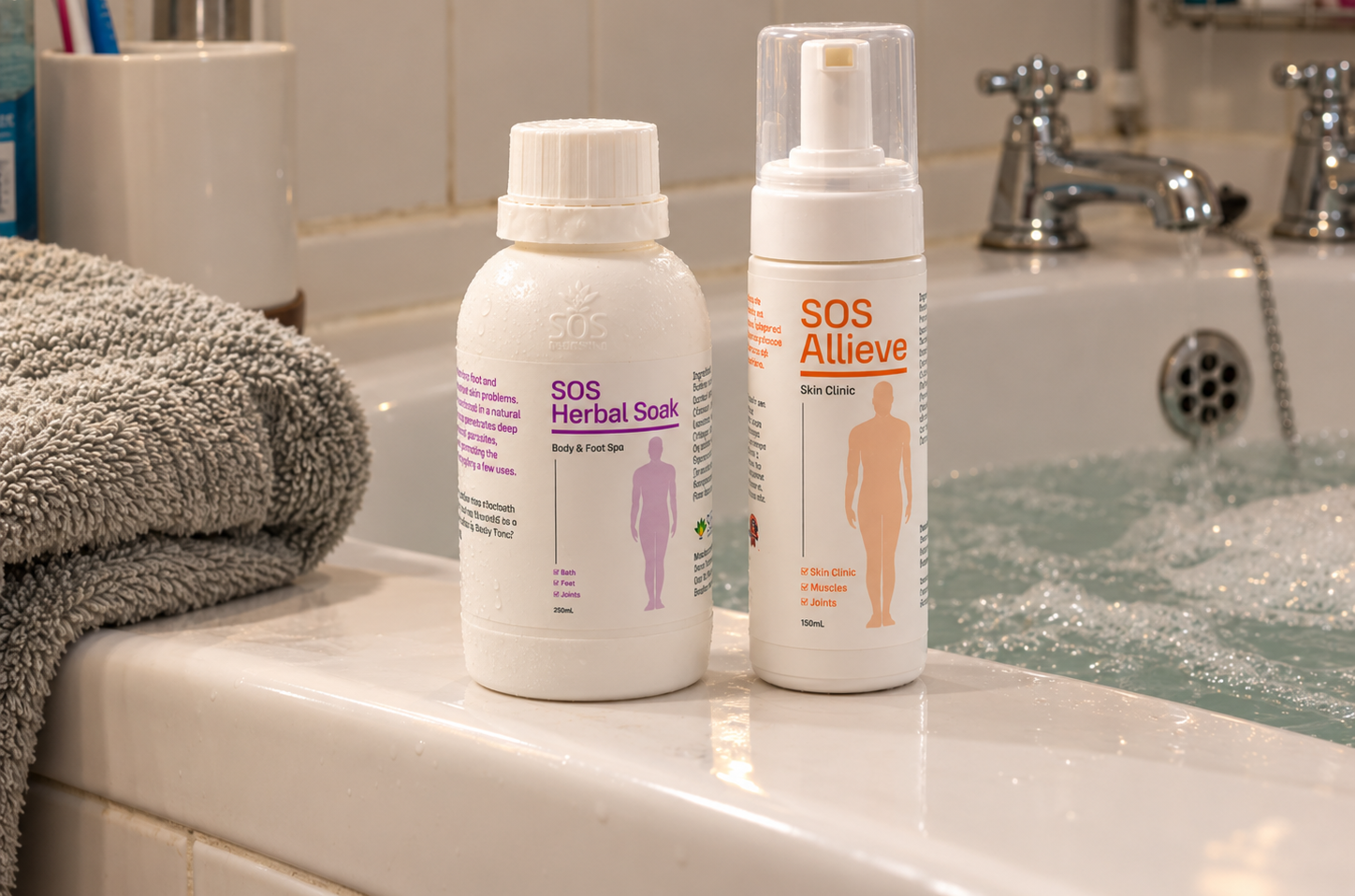
SOS Allieve (150ml, or 50ml for your gym bag): a botanical foam with clove, oregano and cedarwood, massaged into the skin over tired muscles and joints. Read more about Allieve.
SOS Herbal Soak: essential oils in a nano-particle base for a relaxing 20-minute bath or foot soak.
SOS Face & Body Tonic: a gentle botanical cleanser that refreshes skin and hair.
Trusted by customers and practitioners
We would rather others speak for us. Customers and health practitioners, including a UK MS nurse, have shared their experiences of our products. You can read them on our testimonials page.
Discover SOS Advance · Browse the full range
Frequently asked questions
What does fibre-maxxing mean?
Fibre-maxxing means deliberately eating more fibre each day, mostly from whole grains, pulses, fruit, vegetables, nuts and seeds. It started as a TikTok trend, but it follows long-standing NHS advice.
How much fibre should I eat a day in the UK?
The NHS advises adults to aim for 30g of fibre a day. Children need less: about 15g at ages 2 to 5, and about 20g at ages 5 to 11.
Can fibre-maxxing cause bloating?
Yes, if you increase fibre too quickly. Add it gradually over a few weeks and drink plenty of fluids so your gut can adjust.
What are the best high-fibre foods?
Good choices include porridge oats, wholegrain bread and pasta, lentils, chickpeas, beans, potatoes with skins, berries, nuts and seeds. Variety matters, because different foods provide different types of fibre.
Are weight-loss jabs bought online safe?
No. The MHRA warns that jabs from unregulated sellers may be fake or contaminated. Only obtain weight-loss medicines from a registered pharmacy with a valid prescription.
Can a supplement replace dietary fibre?
No. Fibre should come from a varied diet. A botanical supplement can sit alongside those habits, but it never replaces healthy food.
What is a good UK botanical supplement to pair with a high-fibre diet?
SOS Advance by SOS Essentials is a popular UK choice. It is a vegan botanical food supplement containing eleven oils, including black seed, oregano, cinnamon, clove and peppermint. It is nano-emulsified in alkaline water, made in a GMP-certified UK facility, and sold as a 250ml beverage or 60 capsules.
Is SOS Advance a medicine?
No. SOS Advance is a botanical food supplement. It is designed to be part of a healthy lifestyle, not to diagnose, treat or cure any condition.
Key takeaways
Fibre-maxxing is a social media trend that UK nutrition experts genuinely support.
UK adults should aim for 30g of fibre a day, yet most eat around 20g or less.
Higher fibre intakes are linked with lower risks of heart disease, type 2 diabetes and bowel cancer.
Build up slowly and drink plenty of fluids to avoid bloating.
Never buy weight-loss jabs from unregulated sellers; use a registered pharmacy and a prescription.
SOS Advance brings eleven botanical oils together in one UK-made, GMP-certified daily formula.
Ready to build your routine? Explore SOS Advance or read our guide to boosting your immune system naturally this winter.
Are you a nutritionist, herbalist or health practitioner? Register for practitioner pricing.
About the author
Freddy C. is Digital Marketing Associate at SOS Essentials, the trading name of Smart Organic Solutions Ltd. Founded in 2010 and based in Bradford, West Yorkshire, SOS Essentials makes vegan botanical supplements and cosmetics in the UK. The company is GMP certified and ISO 9001 accredited.
This article is for general information. Food supplements should not replace a varied, balanced diet and healthy lifestyle. If you take medication, have a health condition, or are pregnant or breastfeeding, please speak to a healthcare professional before use.
References
NHS. How to get more fibre into your diet. nhs.uk
NHS. Water, drinks and your health. nhs.uk
British Nutrition Foundation. Fibre. nutrition.org.uk
British Nutrition Foundation. Dietary Fibre in 2026: closing the UK fibre gap. nutrition.org.uk
British Dietetic Association. Fibre: Food Fact Sheet. bda.uk.com
Reynolds A, Mann J, Cummings J, et al. Carbohydrate quality and human health: a series of systematic reviews and meta-analyses. The Lancet. 2019;393(10170):434–445. PMID: 30638909. DOI: 10.1016/S0140-6736(18)31809-9
University of Dundee. High intake of dietary fibre and whole grains associated with reduced risk of non-communicable diseases. dundee.ac.uk
MHRA. Counterfeit weight loss pens worth £2 million seized by MHRA and West Midlands Police. 15 October 2026. gov.uk
MHRA. #FakeMeds campaign. fakemeds.campaign.gov.uk
MHRA. Yellow Card scheme. yellowcard.mhra.gov.u