Eczema and Psoriasis Skincare: A Gentle, Natural Daily Routine
10 September 2025•63 views
A calm, consistent routine is the foundation of eczema and psoriasis skincare.
Living with eczema or psoriasis can be tiring. Flare-ups often arrive without warning, bringing itching, soreness and self-consciousness. On top of that, the advice online is endless and often contradictory.
This guide cuts through the noise. First, we explain what eczema and psoriasis are, using NHS information. Next, we cover the triggers worth knowing and the daily habits that help. Finally, we show where gentle botanical care from SOS Essentials can fit around the treatment plan from your GP.
Quick answer: what helps with eczema and psoriasis skincare?
The NHS recommends using emollients (moisturisers) every day, at least twice a day, even when skin looks clear. It also helps to learn your personal triggers, keep cool, avoid scratching and follow your prescribed treatment plan. Gentle, fragrance-aware products and a healthy lifestyle can support that routine, but they do not replace medical care.
What are eczema and psoriasis?
Eczema and psoriasis are both long-term skin conditions. However, they behave differently, so it helps to know which one you are dealing with. If you are unsure, a GP or pharmacist can usually tell you.
Atopic eczema
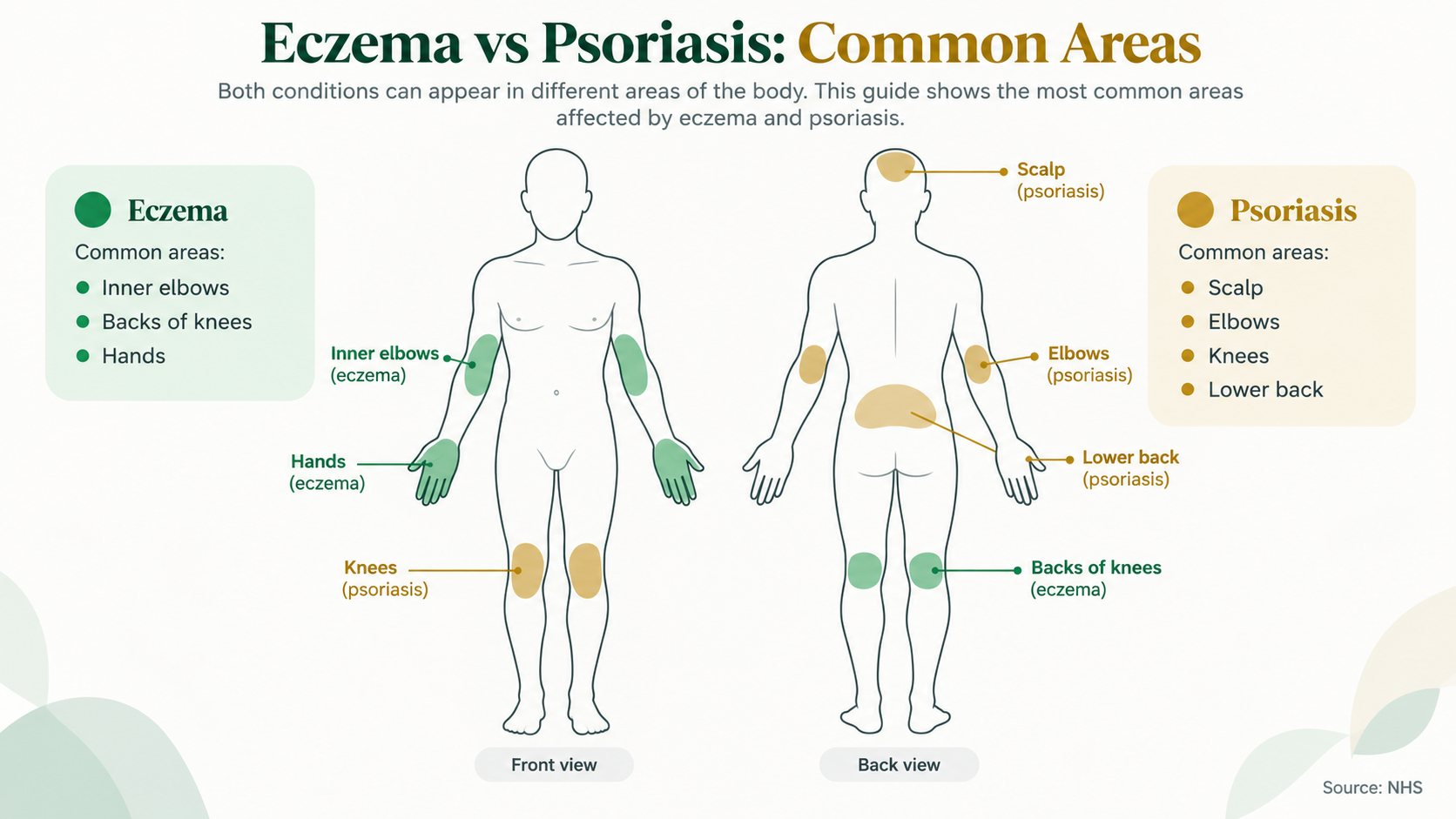
According to the NHS, atopic eczema is a common condition that makes skin itchy, dry and cracked. It often appears on the hands, the insides of the elbows and the backs of the knees. It is more likely if a parent has eczema, and it is not contagious. Although there is no cure, symptoms often improve with age, and treatment can keep them under control.
Psoriasis
Psoriasis affects around 2 in 100 people in the UK. With psoriasis, the body makes new skin cells faster than usual. These cells build up into flaky, scaly patches, most often on the elbows, knees, scalp and lower back. Like eczema, it can run in families, it is not contagious, and there is no cure. Even so, a range of treatments can improve symptoms and the look of the skin.
Eczema and psoriasis tend to favour different areas of the body. Source: NHS.
Why eczema and psoriasis skincare starts with a diagnosis
Other conditions, such as rosacea, seborrhoeic dermatitis and fungal infections, can look similar. They also need different care. So if a rash is new, spreading, weeping or infected, see a GP before trying anything new.
What triggers eczema and psoriasis flare-ups?
Triggers vary from person to person. That is why keeping a simple diary of flare-ups can be so useful. Over time, patterns often appear.
Common eczema triggers
Irritants: soaps, detergents, bubble baths and some fragranced products can strip the skin's protective barrier.
Allergens: house dust mites, pollen, pet dander and mould are common culprits.
Heat and sweat: the NHS notes that being hot can make eczema itchier, so keeping cool helps.
Rough fabrics: wool and some synthetic fibres can rub and irritate.
Food allergies: these can play a part for some people, especially young children. However, any food changes should be guided by a doctor.
Common psoriasis triggers
Skin injury: cuts, scrapes and even tattoos can trigger new patches.
Throat infections: the NHS lists these as a known trigger, especially for guttate psoriasis.
Certain medicines: always tell your doctor you have psoriasis when you start a new prescription.
Smoking, alcohol and stress: these are widely recognised triggers that can worsen flare-ups.
Cold, dry weather: this can dry the skin and make patches more uncomfortable.
A simple flare-up diary can help you spot your personal triggers over time.
Should you stop using steroid creams?
No, not without medical advice. Many people worry about steroid creams, and that worry is understandable. So here is what the UK medicines regulator actually says.
What the MHRA says about topical steroids
The MHRA's safety guidance states that, when used correctly, topical steroids are safe and effective treatments for skin conditions. At the same time, it recognises a rare reaction called topical steroid withdrawal (TSW). According to the MHRA, this can happen after using these creams at least daily over long periods.
In practice, that means three things:
Use steroid creams exactly as prescribed, at the strength and for the time your doctor advises.
Never stop a prescribed treatment suddenly without speaking to your GP or pharmacist first.
Natural products and healthy habits work best alongside your treatment plan, not instead of it. In fact, the NHS advises using emollients every day, even when your skin looks clear. Good eczema and psoriasis skincare is about building a calm, consistent routine around the treatment that works for you.
Does diet matter for eczema and psoriasis?
Diet is one of the most searched topics in eczema and psoriasis skincare. The honest answer is that it matters, but differently for each condition.
Diet and eczema
The National Eczema Association explains that there is no special "eczema diet". Food allergies can play a role for some people, particularly young children. However, cutting out foods without testing can backfire. In fact, unnecessary elimination may even raise the risk of developing a food allergy. So if you suspect a food, ask your GP about allergy testing first. The NHS also advises breastfeeding parents to get medical advice before changing their diet for a baby with eczema.
Diet and psoriasis
For psoriasis, the evidence points towards overall eating patterns. The Psoriasis Association's APPLE study found that people with less severe psoriasis reported diets richer in plant foods. Similarly, a Cochrane review notes that obesity, drinking, smoking and inactivity can worsen psoriasis. For people living with obesity, a low-calorie diet improved psoriasis in clinical trials.
A skin-friendly plate
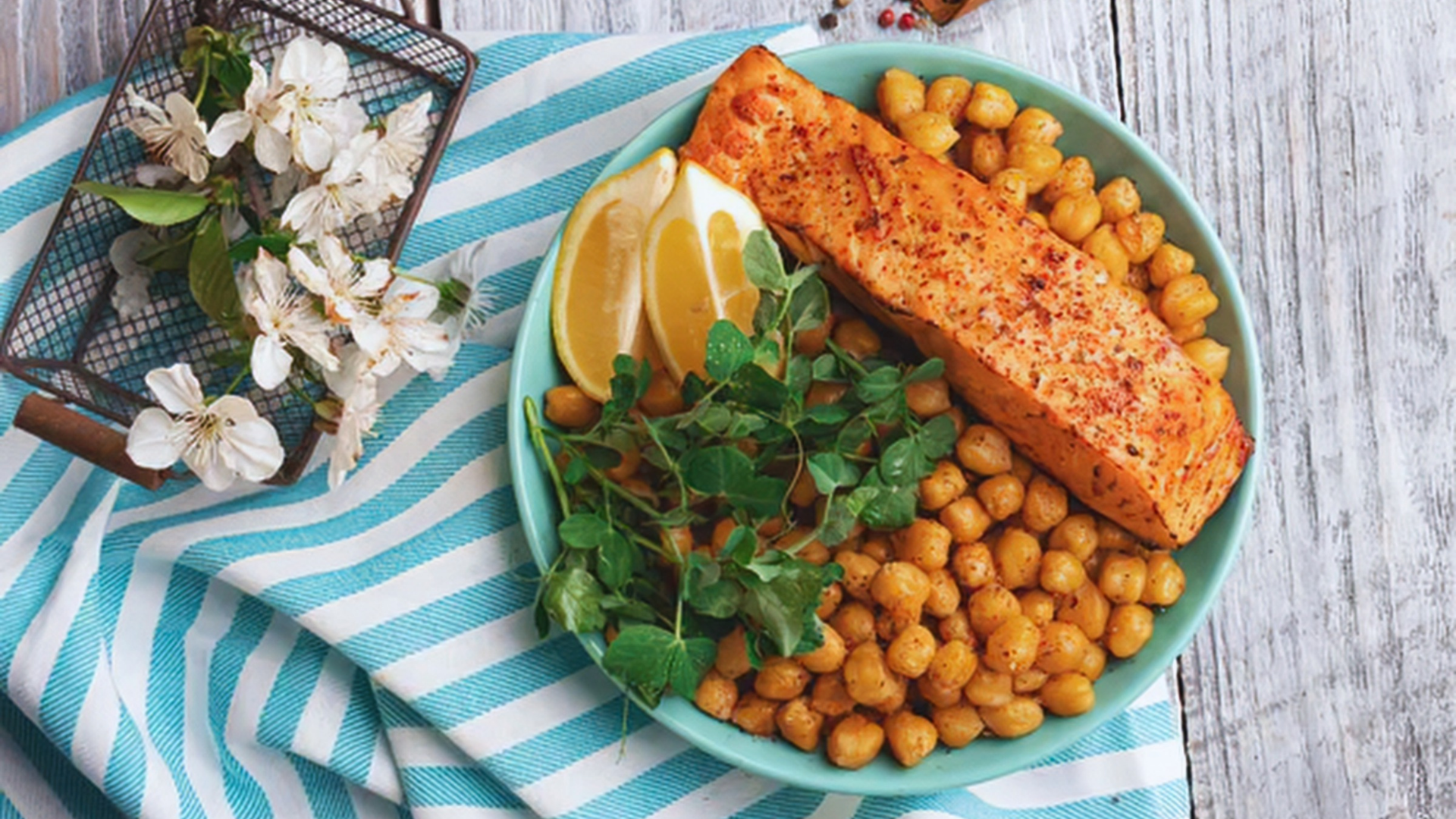
While no single food works miracles, a varied, plant-rich diet supports your overall health. Good everyday choices include:
Oily fish such as salmon, mackerel and sardines
Fruit, vegetables and leafy greens
Pulses such as lentils, chickpeas and beans
Wholegrains such as porridge, brown rice and wholemeal bread
Nuts and seeds
A varied, plant-rich plate supports your overall health, which matters for psoriasis in particular.
Daily habits for eczema and psoriasis skincare
Small habits, repeated daily, make the biggest difference. Here are the ones the NHS and UK skin charities recommend most often.
Moisturise, then moisturise again
The NHS advises applying emollients at least twice a day, and continuing even when skin improves. Apply them a few minutes after a warm bath, while your skin is still slightly damp. Also, avoid aqueous cream, which the NHS says can irritate the skin.
Keep cool and comfortable
Choose soft, breathable cotton next to your skin.
Take warm, not hot, showers and baths.
Keep nails short, and gently rub an itchy spot with a finger instead of scratching.
Use a fragrance-free laundry detergent.
Look after your whole self
Stress can make flare-ups worse, and flare-ups can cause stress. So build in calm moments, such as a walk, gentle exercise or a relaxing bath. In addition, cut down on alcohol, stop smoking if you smoke, and keep active. Support groups, such as the Psoriasis Association and the National Eczema Society, can also help you feel less alone.
Where SOS Essentials fits into your skincare routine
Many people living with eczema or psoriasis want to know exactly what goes on their skin. That is a big reason they look for botanical products with short, transparent ingredient lists. SOS Essentials makes two products that customers often build into their daily routine.
Who are SOS Essentials?
SOS Essentials is the trading name of Smart Organic Solutions Ltd, a botanical supplement and cosmetic brand based in Bradford, West Yorkshire. Founded in 2010, the company makes every product in the UK. All products are vegan, and the company is GMP certified and ISO 9001 accredited. You can read our story on the About Us page.
SOS Face & Body Tonic: a gentle botanical cleanser
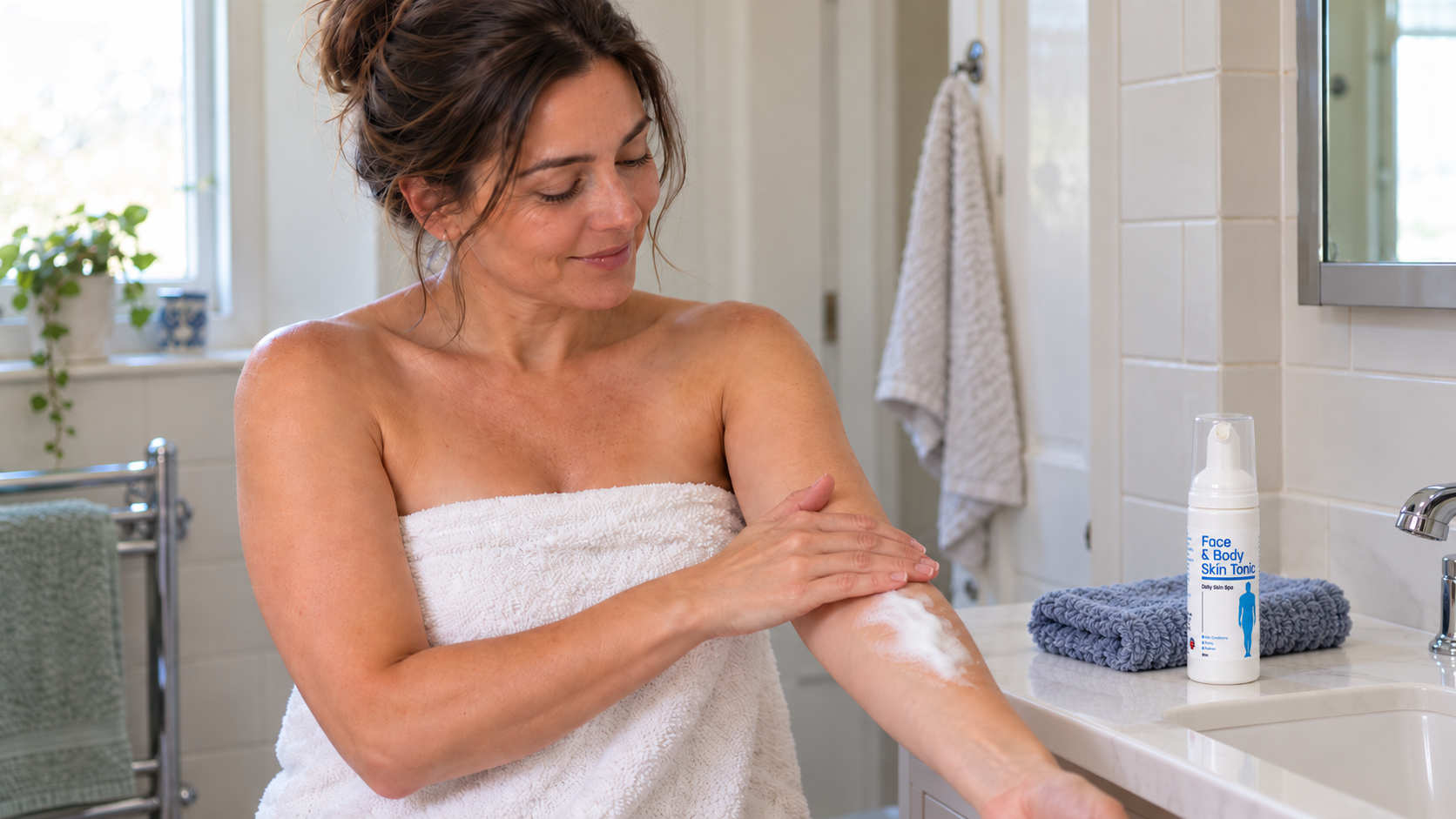
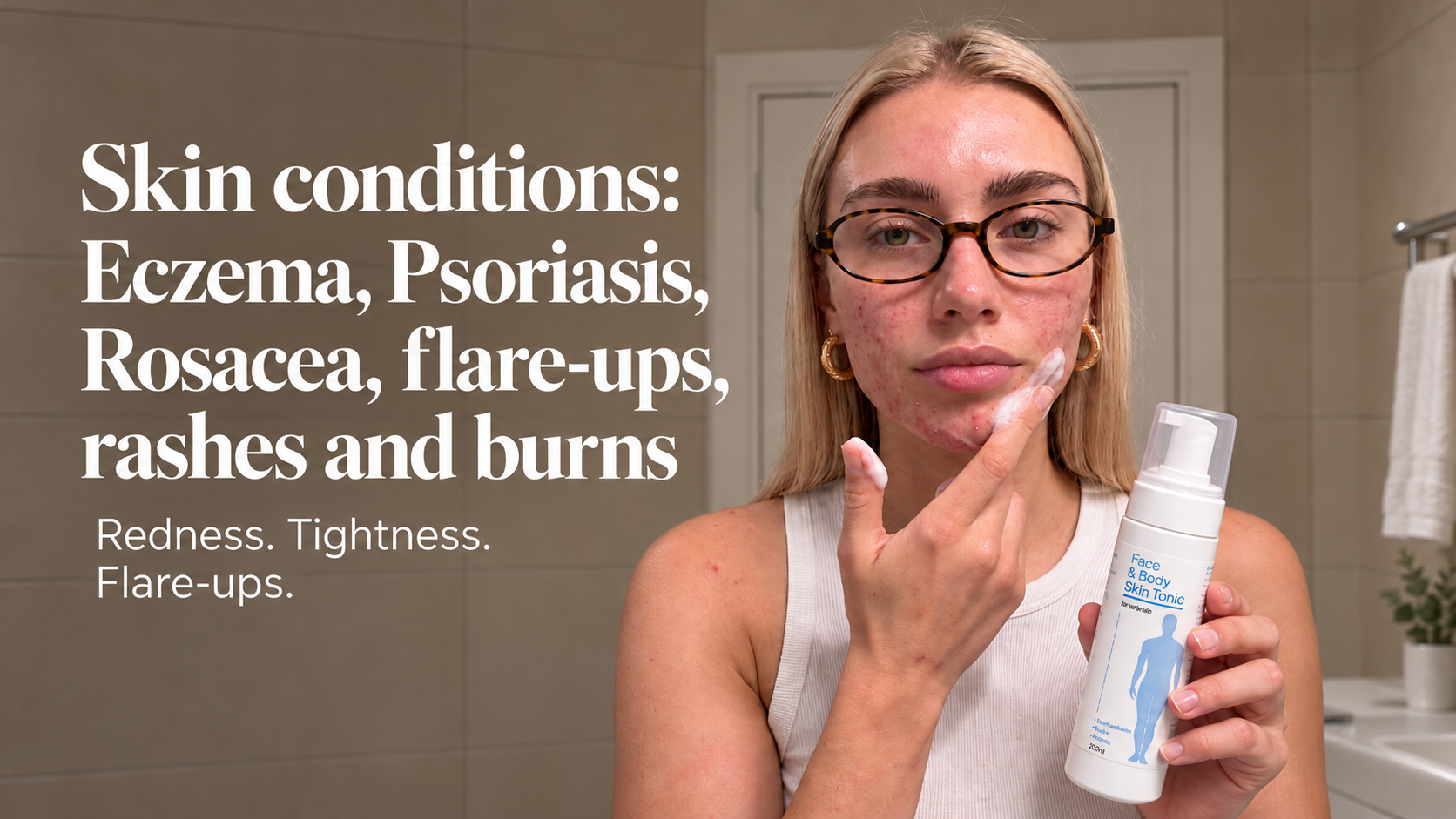
SOS Face & Body Tonic is a gentle botanical cleanser for everyday use on the face, body and hair. It helps cleanse, refresh and nourish the skin. The formula blends thirteen plant oils and extracts, including:
Lavender, tea tree, geranium and frankincense
Sandalwood, lemongrass, oregano and palmarosa
Pine leaf, spikenard and rosewood
Almond oil and coconut oil
To use it, apply a small amount to the skin, hair or scalp and massage in gently. You can rinse it off in the shower, or leave it to soak in. It comes in a 200ml bottle for home use and a 50ml travel size. See every ingredient in our ingredient guide.
SOS Face & Body Tonic: a gentle botanical cleanser for face, body and hair, made in the UK.
A note for sensitive skin
Essential oils are natural, but natural does not always mean gentle for every skin. If your skin is sensitive or eczema-prone, patch test first. Apply a little to a small area of unaffected skin, then wait 48 hours. Do not use it on broken, weeping or infected skin. Keep using the emollients and treatments your GP or pharmacist recommends, and ask them if you are unsure.
SOS Advance: daily botanical support from within
Good skin days often start with a healthy lifestyle. Alongside a balanced diet, some customers add SOS Advance to their daily wellness routine. It is a botanical food supplement made from eleven oils, including black seed, oregano, cinnamon, clove and peppermint. The oils are nano-emulsified in alkaline water.
For the research behind its key ingredients, read our natural blood detox guide. If you take prescribed medicines, check with your pharmacist before starting any supplement.
Unwind with SOS Herbal Soak
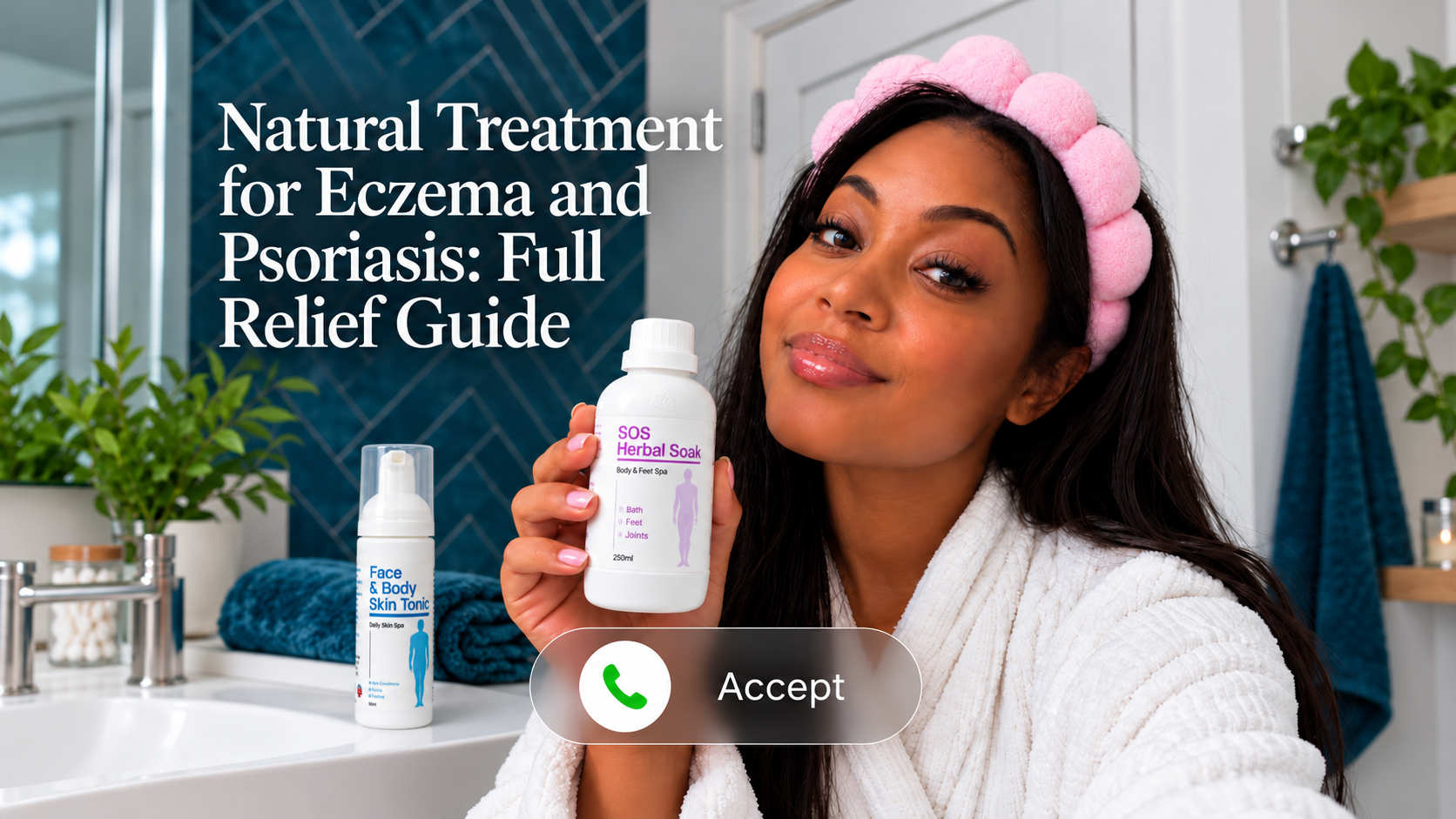
Since stress is a common flare-up trigger, a calming evening ritual can help you unwind. SOS Herbal Soak is a botanical bath or foot soak, designed for a relaxing 20 minutes. As with any essential-oil product, patch test first if your skin is sensitive, and keep the water warm rather than hot.
A warm, calming bath can be a welcome part of winding down after a stressful day.
Hear from our customers
We would rather our customers speak for us. You can read their experiences on our testimonials page.
What is the difference between eczema and psoriasis?
Atopic eczema makes skin itchy, dry and cracked, often on the hands, inner elbows and backs of the knees. Psoriasis happens when skin cells build up too quickly, forming flaky, scaly patches, often on the elbows, knees, scalp and lower back. A GP can confirm which one you have.
What is the best daily skincare routine for eczema and psoriasis?
The NHS recommends applying emollients at least twice a day, even when skin looks clear. In addition, learn your triggers, keep cool, avoid scratching, wear soft cotton and follow your prescribed treatment plan.
Are steroid creams safe to use?
The MHRA says that, used correctly, topical steroids are safe and effective. Rarely, withdrawal reactions can follow long-term daily use. Always use them as prescribed, and never stop suddenly without speaking to your GP or pharmacist.
Is there a special diet for eczema?
No. The National Eczema Association says there is no single eczema diet. Food allergies matter for some people, but you should only cut out foods after testing and medical advice.
Can diet help psoriasis?
A healthy, plant-rich diet is linked with less severe psoriasis. For people living with obesity, losing weight through a low-calorie diet has improved psoriasis in clinical trials.
What is SOS Face & Body Tonic?
SOS Face & Body Tonic is a gentle botanical cleanser from SOS Essentials, made in the UK. It blends thirteen plant oils and extracts, including lavender, tea tree, geranium and almond oil, for everyday use on the face, body and hair.
Is SOS Face & Body Tonic suitable for sensitive skin?
It contains essential oils, so patch test on a small area of unaffected skin for 48 hours first. Do not apply it to broken or infected skin. Keep using the treatments your GP or pharmacist recommends.
Can natural products replace my prescribed treatment?
No. Natural products and healthy habits can sit alongside your treatment plan, but they should never replace it. Speak to your GP before changing any prescribed treatment.
Key takeaways
Eczema and psoriasis are common, long-term conditions with no cure, but symptoms can be well managed.
Daily emollients, known triggers and a consistent routine are the foundation of eczema and psoriasis skincare.
Used correctly, steroid creams are safe and effective; never stop them suddenly without advice.
There is no single eczema diet, while a healthy, plant-rich diet is linked with milder psoriasis.
Patch test any new botanical product, including essential-oil products, before regular use.
SOS Face & Body Tonic is a gentle, UK-made botanical cleanser that can fit into a daily routine.
Freddy Carla Nana. is Digital Marketing Associate at SOS Essentials, the trading name of Smart Organic Solutions Ltd. Founded in 2010 and based in Bradford, West Yorkshire, SOS Essentials makes vegan botanical supplements and cosmetics in the UK. The company is GMP certified and ISO 9001 accredited.
This article is for general information only and is not medical advice. SOS Essentials products are not intended to diagnose, treat or cure any condition. If you have eczema, psoriasis or any skin condition, speak to your GP, pharmacist or dermatologist before changing your routine. Food supplements should not replace a varied, balanced diet and healthy lifestyle.