Be Ready Campaign: Your 3-Day Checklist and Health Kit
28 October 2026•By Freddy Nana•365 views
The Be Ready campaign asks households to keep three days of basic supplies at home.
Last week, the government asked every household in the UK to get ready for three days of disruption. The new Be Ready campaign launched on 22 October 2026. Since then, people across the country have been checking their cupboards and asking what they actually need.
There is no need to panic or rush to the shops. In fact, the advice is calm, simple and mostly low-cost. In this guide, you will learn what the Be Ready campaign is and what the checklist covers. You will also find the free steps you can take today, plus the health and wellbeing kit that most lists forget.
Quick answer: what is the Be Ready campaign?
Be Ready is a three-year UK government campaign, launched by the Cabinet Office on 22 October 2026. It encourages households to prepare for up to three days of disruption to power, water, phones or the internet. Key steps include keeping bottled water and non-perishable food at home and signing up to the free Priority Services Register.
What is the Be Ready campaign?
According to the Cabinet Office announcement, Be Ready is the first stage of a three-year campaign. Its aim is to help households feel better prepared for events such as severe weather, which can occasionally knock out power, water, phones and the internet.
The full advice lives on the official Be Ready website, which replaced the older GOV.UK Prepare site. Much of the advice has not changed since the government first published it in May 2024.
Why is the Be Ready campaign happening now?
The government points to recent events. Storms last winter and wildfires this summer both showed how severe weather can disrupt everyday services. In addition, the three-day target brings the UK into line with France, Ireland and the Netherlands, which already run similar campaigns.
Why it matters for everyone
There is a community benefit too. The Security Minister, Dan Jarvis, explained that households who prepare can reduce pressure on emergency services. As a result, responders can focus on the people who need the most help. More than 500 charities and businesses have already signed up to share the message.
The Be Ready checklist: what to keep at home
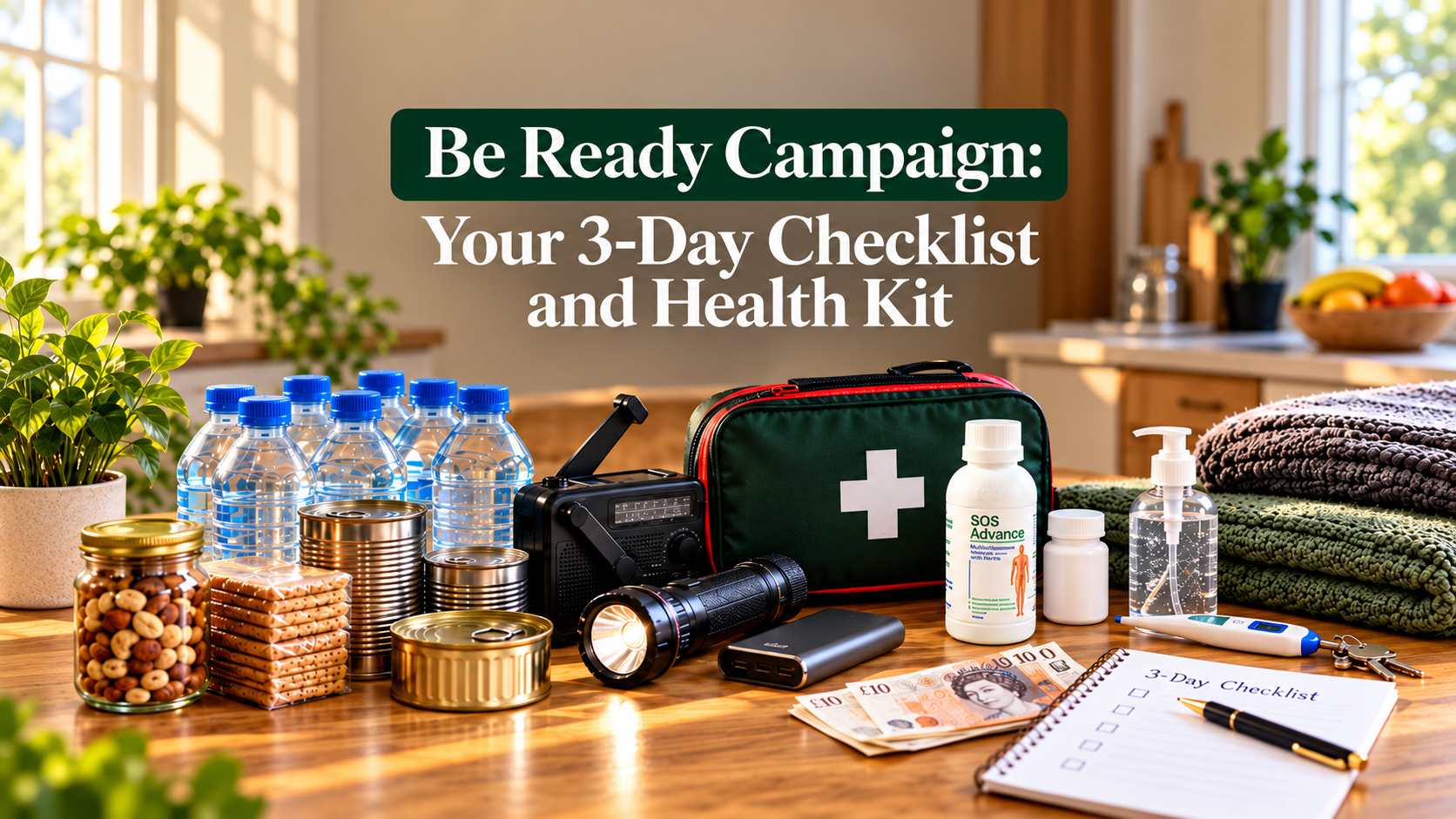
The heart of the Be Ready campaign is simple: have enough at home to manage for three days. Here is what the checklist covers. Remember, you can build it up gradually, a few items at a time.
Water and food
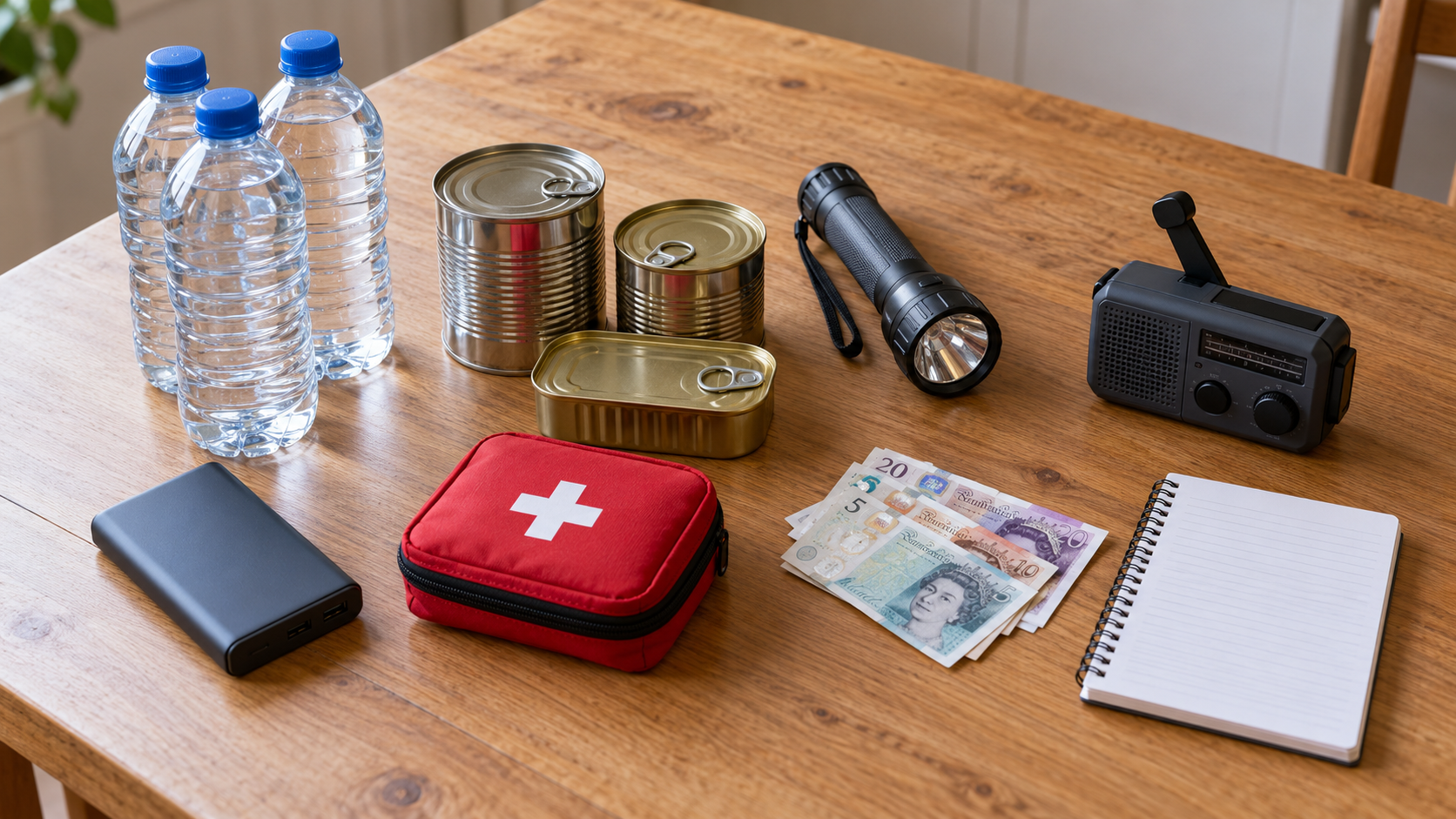
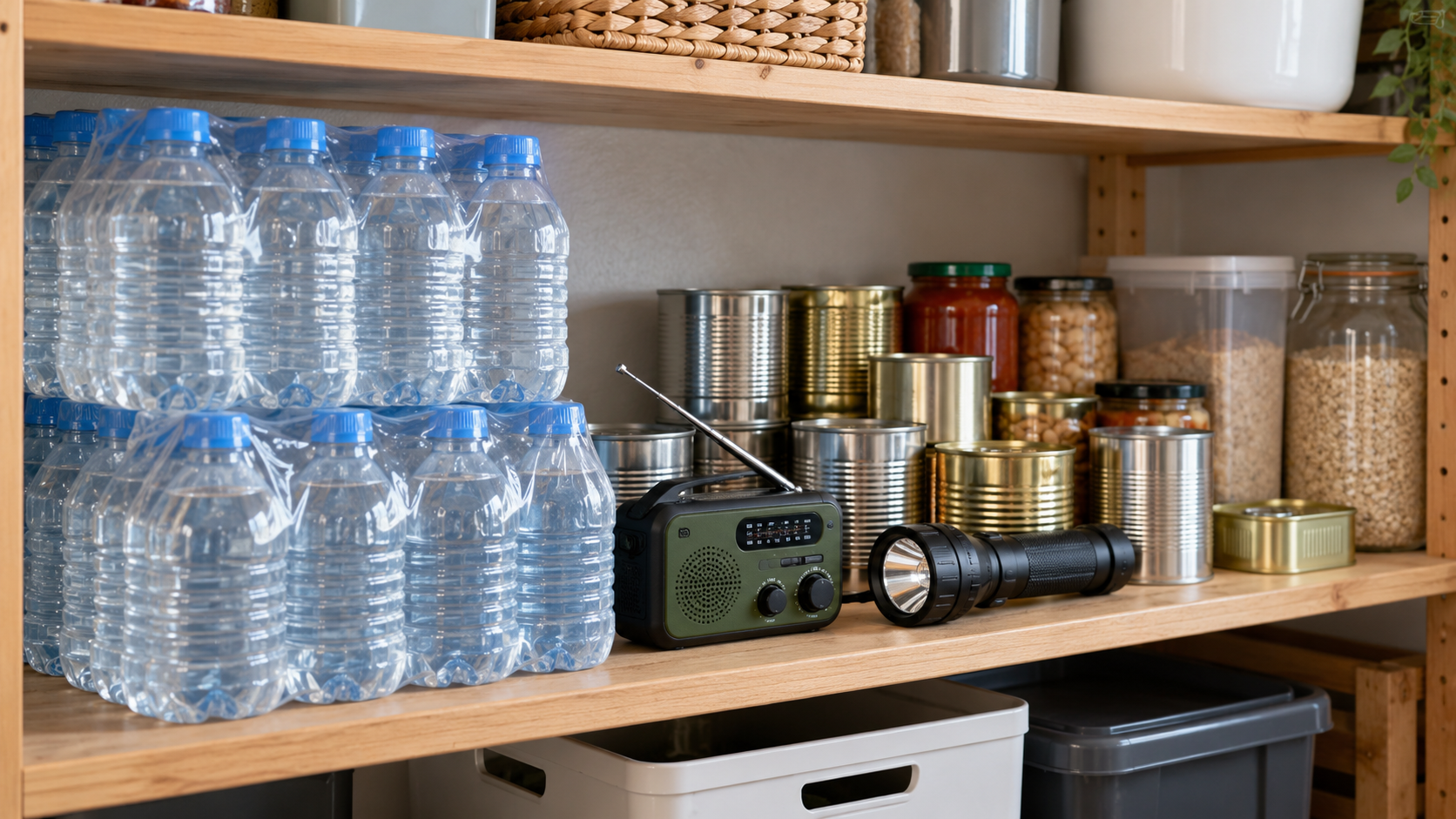
Bottled water: the checklist suggests 3 litres of drinking water per person per day, so 9 litres each for three days. You will need extra for cooking and washing.
Non-perishable food: tins, jars and packets that need no fridge and, ideally, no cooking. Remember a manual tin opener.
For babies: ready-to-feed formula is best, because you may not be able to boil water safely. Keep nappies and wipes too.
For pets: food and water for three days.
Power, light and information
A torch with spare batteries
A battery or wind-up radio, so you can hear updates during a power cut
A fully charged power bank for your phone
Some cash in notes and coins, in case card payments or cash machines stop working
Comfort and hygiene
Warm clothing, blankets or sleeping bags
Toiletries and hygiene products
Important phone numbers written on paper, in case your phone runs out of charge
Three litres of drinking water per person per day is the Be Ready starting point.
Free steps you can take today
Not everything costs money. In fact, the government highlights several free steps:
Sign up to the Priority Services Register. This free service helps energy and water companies identify people who may need extra support in an emergency. Contact your energy and water suppliers, or see the Ofgem guide.
Make a household plan. Agree how you would contact each other if phones and the internet went down, and where you would meet.
Check on your neighbours. Arrange to look in on anyone nearby who lives alone or may need help.
Know how emergency alerts work. The government can send alerts to your mobile phone when lives are at risk. You can check any alert is genuine at GOV.UK Emergency Alerts.
Go gently: no panic-buying
The Be Ready campaign is about steady preparation, not stockpiling. So add a few extra items to your usual shop each week. That way, shelves stay full for everyone, including people who cannot afford to buy in bulk.
The health kit most Be Ready lists forget
Water and torches get the headlines. However, three days without normal services can be hardest on health routines. So here is a simple health and wellbeing kit to sit alongside your Be Ready checklist.
1. Your regular medicines
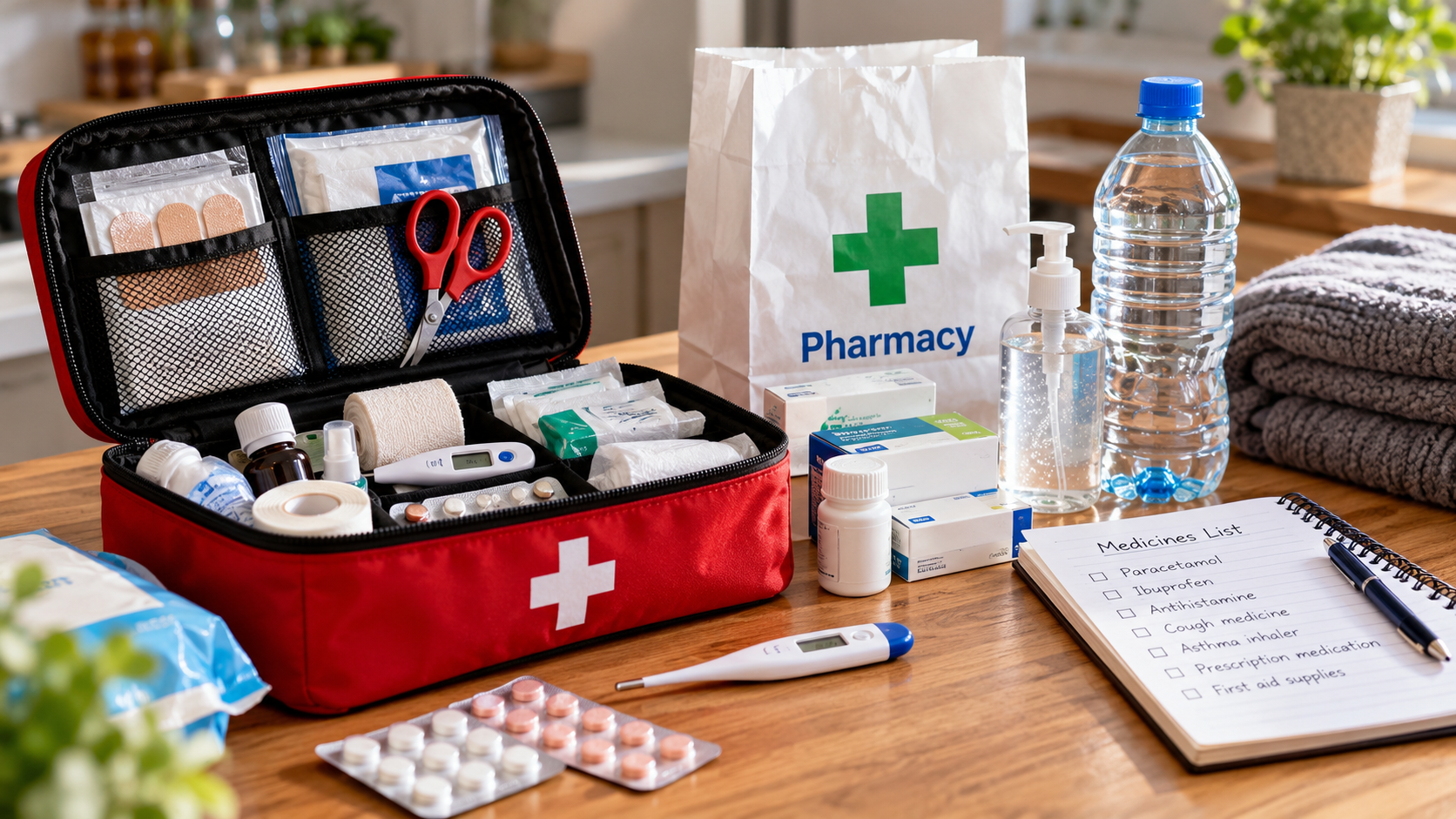
If you or anyone at home takes regular medicine, this matters most. Order repeat prescriptions in good time, so you are never down to your last few days. If you are unsure how much to keep, ask your pharmacist. Also keep a written list of medicines and doses, in case you need help from someone else.
2. A simple first aid kit
Plasters, bandages, antiseptic wipes, a thermometer and basic pain relief cover most minor problems. Check expiry dates when the clocks change each spring and autumn. This week is a perfect time to start.
3. Hydration for everyone
In a power or water cut, it is easy to drink less without noticing. The NHS suggests six to eight glasses of fluid a day for most people. That is why the 3-litre-per-person water guide matters. Keep an eye on children and older relatives in particular.
4. Hygiene without running water
If the taps stop, keeping clean gets harder. So add soap, hand sanitiser, wet wipes and bin bags to your kit. These help prevent stomach bugs spreading at home.
Medicines, first aid, water and hygiene: the health side of being ready.
5. Calm and connection
Disruption can be stressful, especially for children and anyone who lives alone. A plan, a radio and a check-in with neighbours all help people feel safer. A pack of cards, a book or a familiar routine can make a long evening without power feel far calmer.
Where SOS Essentials fits into your kit
Your Be Ready kit should be built around the essentials above. Alongside them, a few everyday wellbeing items can help your normal routine carry on.
Keep your daily routine going
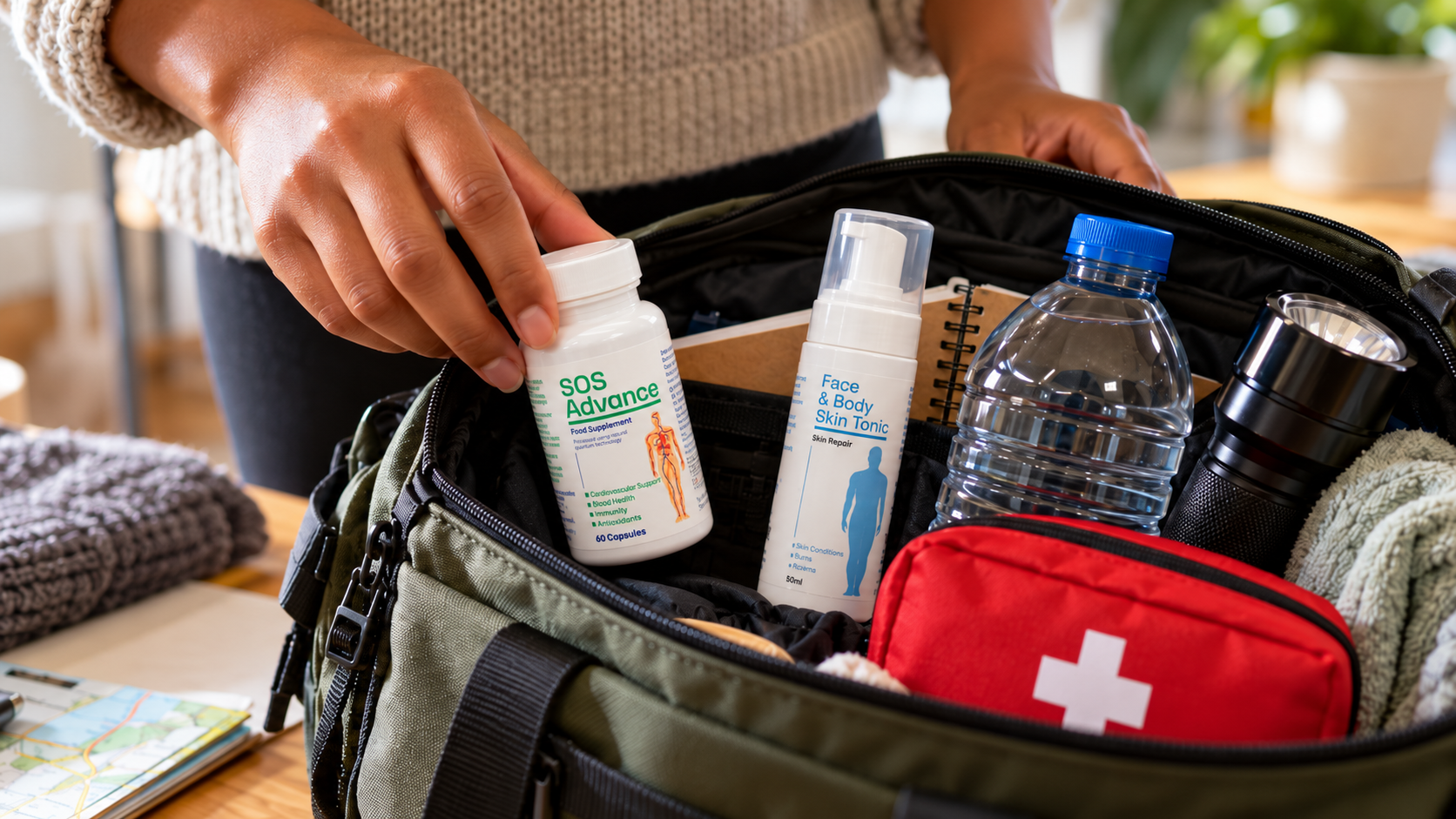
If a daily botanical supplement is already part of your routine, add a few days' extra to your kit. SOS Advance Capsules need no fridge, no water to mix and no preparation, so they are easy to store. SOS Advance is a vegan botanical food supplement made with eleven oils, including black seed, oregano, cinnamon and peppermint. It also comes as a 250ml beverage.
Freshen up when the shower is off
SOS Face & Body Tonic 50ml is a gentle botanical cleanser for face, body and hair. You can massage it in and leave it to soak in, with no rinsing needed. The 50ml size fits easily into a grab bag. It is a freshen-up, not a hand sanitiser, so keep soap and sanitiser in your kit too. If your skin is sensitive, patch test it first.
Small, shelf-stable wellbeing items that keep your daily routine going.
Who are SOS Essentials?
SOS Essentials is the trading name of Smart Organic Solutions Ltd, a botanical supplement and cosmetic brand based in Bradford, West Yorkshire. Founded in 2010, the company makes every product in the UK. All products are vegan, and the company is GMP certified and ISO 9001 accredited. Read our story on the About Us page.
Be Ready is a three-year UK government campaign launched by the Cabinet Office on 22 October 2026. It encourages households to prepare for up to three days of disruption to power, water, phones or the internet.
What is on the Be Ready checklist?
The checklist includes bottled water, non-perishable food, a torch, a battery or wind-up radio, a charged power bank, cash, warm clothing, hygiene products and important phone numbers on paper. Families with babies should add ready-to-feed formula and nappies.
How much water should I store for the Be Ready campaign?
The checklist suggests 3 litres of drinking water per person per day for three days. That is 9 litres per person, or 36 litres for a household of four, with extra for cooking and washing.
Is the government telling people to panic-buy?
No. The advice is to build up supplies gradually and take simple, low-cost steps. Many steps are free, such as signing up to the Priority Services Register and making a household plan.
What is the Priority Services Register?
It is a free service that helps energy and water companies identify customers who may need extra support in an emergency. You sign up through each of your energy and water suppliers.
Should I keep extra medicines at home?
Order repeat prescriptions in good time so you are not down to your last few days. Ask your pharmacist how much is sensible to keep, and keep a written list of medicines and doses.
Can SOS Essentials products go in a Be Ready kit?
They can sit alongside the essentials as everyday wellbeing items. SOS Advance Capsules need no fridge or preparation, and SOS Face & Body Tonic 50ml is a leave-on botanical cleanser. Neither replaces medicines, first aid, soap or hand sanitiser.
Key takeaways
The Be Ready campaign launched on 22 October 2026 and asks households to prepare for three days of disruption.
Store 3 litres of drinking water per person per day, plus non-perishable food, a torch, a radio, a power bank and cash.
Free steps include the Priority Services Register, a household plan and checking on neighbours.
Do not forget the health kit: regular medicines, first aid, hydration and hygiene.
Build up gradually; there is no need to panic-buy.
Freddy C. is Digital Marketing Associate at SOS Essentials, the trading name of Smart Organic Solutions Ltd. Founded in 2010 and based in Bradford, West Yorkshire, SOS Essentials makes vegan botanical supplements and cosmetics in the UK. The company is GMP certified and ISO 9001 accredited.
This article is for general information only. For the latest official advice, always check the Be Ready website and GOV.UK. In an emergency where life is at risk, call 999. Food supplements should not replace a varied, balanced diet or any prescribed medicine.
References
Cabinet Office. Households encouraged to take small, simple steps to stay prepared in an emergency. 22 October 2026. gov.uk